
Materials
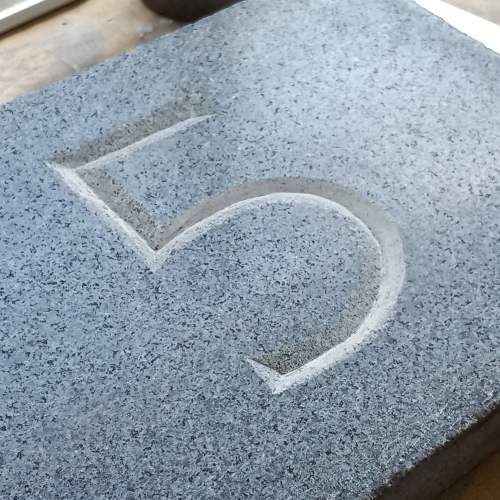
The first step in stone letter carving is to choose the right stone. Different types of stone have different properties, such as hardness, texture, colour, and grain. Some of the most common stones used for letter carving are slate, limestone and sandstone. Slate is a fine-grained metamorphic rock that is easy to carve and has a smooth surface. Limestone is a sedimentary rock that is soft and porous, but can have fossils and other interesting features. Sandstone is another sedimentary rock that is harder than limestone, but can have a variety of colours and patterns. Granite is plentiful in Cornwall but is extremely hard to carve by hand, the pyrites and grains make carved letters difficult to see so they are often painted or gilded.
Tools
The next step is to choose the right tools. The main tools used for stone letter carving are chisels, hammers, and pencils. The most common chisels are flat chisels, which have straight edges, and gouges, which have curved edges. Hammers are used to strike the chisels and drive them into the stone. They can be made of metal, or polypropylene and are known as dummies. Most importantly, pencils are used to draw the outline of the letters on to the stone before carving.
Cutting Techniques
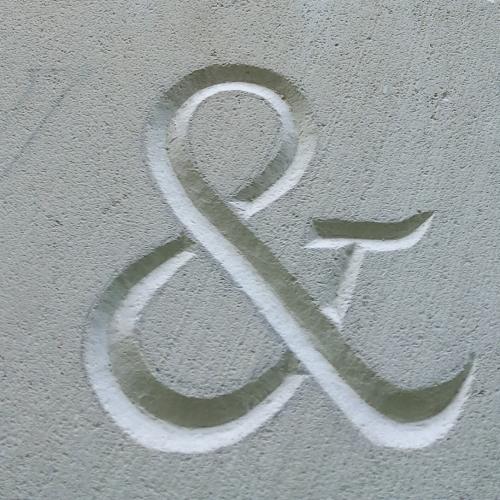
The most important technique of stone letter carving is the V cut for incised letters1. This is the simplest and quickest way to make a letter in stone. There are three techniques which are most used: ‘Chasing’, ‘Chopping’ and ‘Stabbing’1. When you first start stone letter carving, the best method to use is ‘chasing’ and as you get better you will begin to use the other techniques1.
To make a V cut, you need to hold the chisel at a 45 degree angle to the surface of the stone1. This will ensure that as the chisel cuts first one side and then the other, a V cut of approximately 90 degrees will be made1. The depth of carving depends on the material being used and the size of the lettering1. You also need to hold the hammer lightly and use wrist movements to tap the chisel gently into the stone1. You should not hit the chisel too hard or too fast, as this can damage the stone or the chisel.
The chasing technique is when the chisel head is tapped lightly with the hammer1. The chisel shank should be held at a shallow angle to the stone1. This allows the chisel to cut the stone while moving slowly forward1. The chisel should not get stuck and if it does, you are holding the chisel at the wrong angle1.
The chopping technique is when you remove larger pieces of stone from the V cut1. The chisel shank should be held at a steeper angle but the chisel edge to the surface of the stone should still be approximately at a 45 degree angle1. The chisel should travel diagonally down into the bottom of the V cut1.
The stabbing technique is used for the initial stages of large scale letters in order to remove stone1. The shank of the chisel is again held at a 45 degree angle to the surface of the stone1. The hammer should drive the chisel into the stone moving it along with each stroke1.
History of Letter Carving
Stone letter carving has a long and rich history. Some of the earliest examples of stone letter carving are found in ancient Egypt, where hieroglyphs were carved on monuments, tombs, and temples. Other ancient civilizations that practiced stone letter carving include Mesopotamia, Greece, Rome, China, India, and Maya.
Stone letter carving reached its peak during the Middle Ages in Europe, when it was used for religious and secular purposes. Monks carved inscriptions on churches, cathedrals, and gravestones using Roman capitals or Gothic script. Knights carved their coats of arms on castles and shields using heraldic symbols. Merchants carved their names and signs on shops and houses using decorative fonts.
Stone letter carving declined in popularity after the invention of printing in the 15th century, which made it easier and cheaper to produce books and documents. However, it was revived in the 19th century by artists such as John Ruskin, William Morris, and Eric Gill, who were inspired by the beauty and craftsmanship of medieval stone letter carving. They created their own styles and fonts, and carved them on buildings, monuments, and sculptures. Some of their works can be seen in London, Oxford, Cambridge, and other places in the UK.
Stone Letter Carving Today
Stone letter carving is practiced today by artists and craftsmen who appreciate its artistic and cultural value. They experiment with new forms and expressions, such as abstract shapes, symbols, and logos. Some of the contemporary stone letter carvers include David Kindersley, Richard Kindersley, John Neilson, Tom Perkins, Fergus Wessel, and Simon Burns-Cox.
Courses and Workshops
I hope this article has inspired you to explore the art of stone letter carving. It is a rewarding and enjoyable activity that can enrich your life and the lives of others. If there is enough interest, I will look into holding a workshop or run a short course in stone letter carving. Please let me know if this is something you would like to do! Happy carving! 😊
